Menu
Search
EN / DE

Farmer Norton

Sustainable housing for Salford's regeneration ambitions

Scroll
Bauher*innen: Muse Homes
Status: On site
Standort: Salford, Manchester
Show more
Nutzung: Housing, Masterplanning
Tagged: Sustainability Exemplars

Kollaboration

Planning Consultant CBRE
Project Manager Identity Consult
Landscape Architect Reform
Structural & Civil Engineer Clancy
Sustainability Consultant Max Fordham
MEP Engineer Max Fordham and Hannan
Cost Consultant Arcadis
Low-energy homes combining standardised typologies and fabric-first design creating a community-focused neighbourhood.

Kollaboration

Planning Consultant CBRE
Project Manager Identity Consult
Landscape Architect Reform
Structural & Civil Engineer Clancy
Sustainability Consultant Max Fordham
MEP Engineer Max Fordham and Hannan
Cost Consultant Arcadis
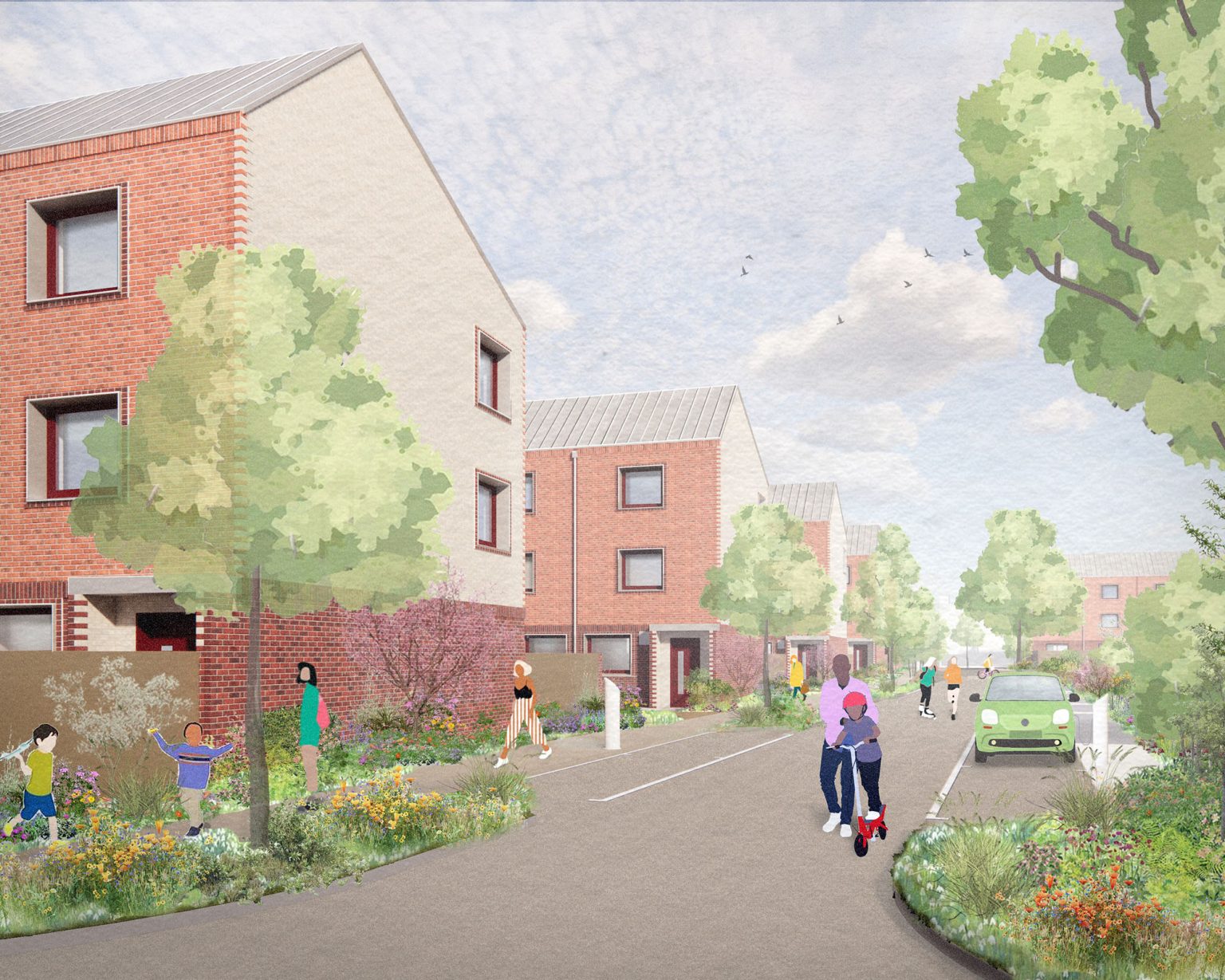
01 A masterplan for the north-west

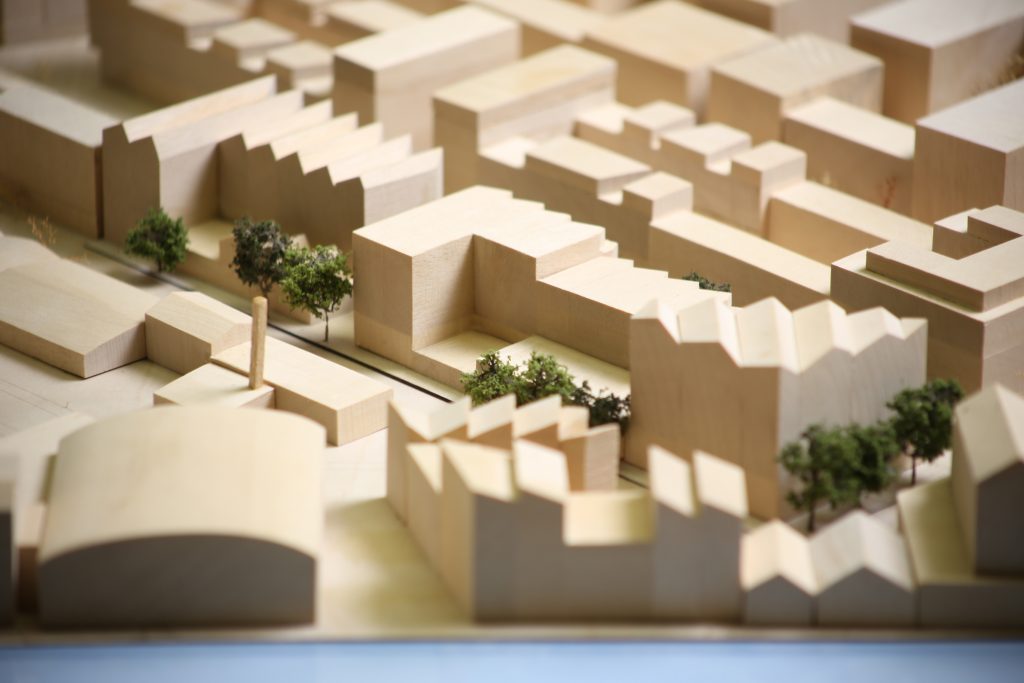
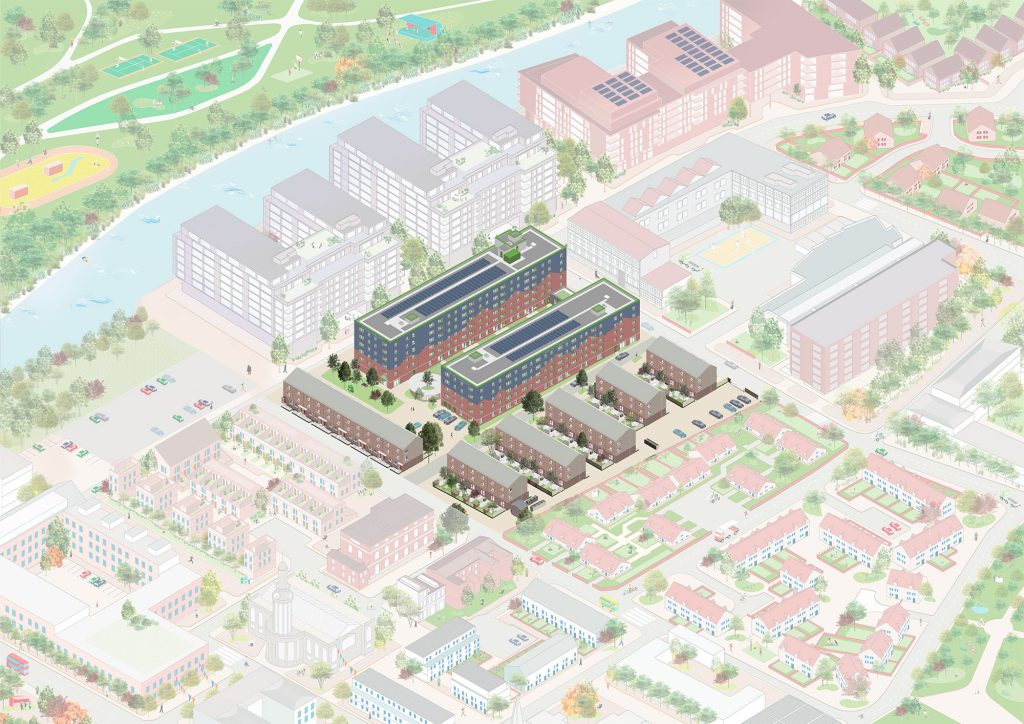
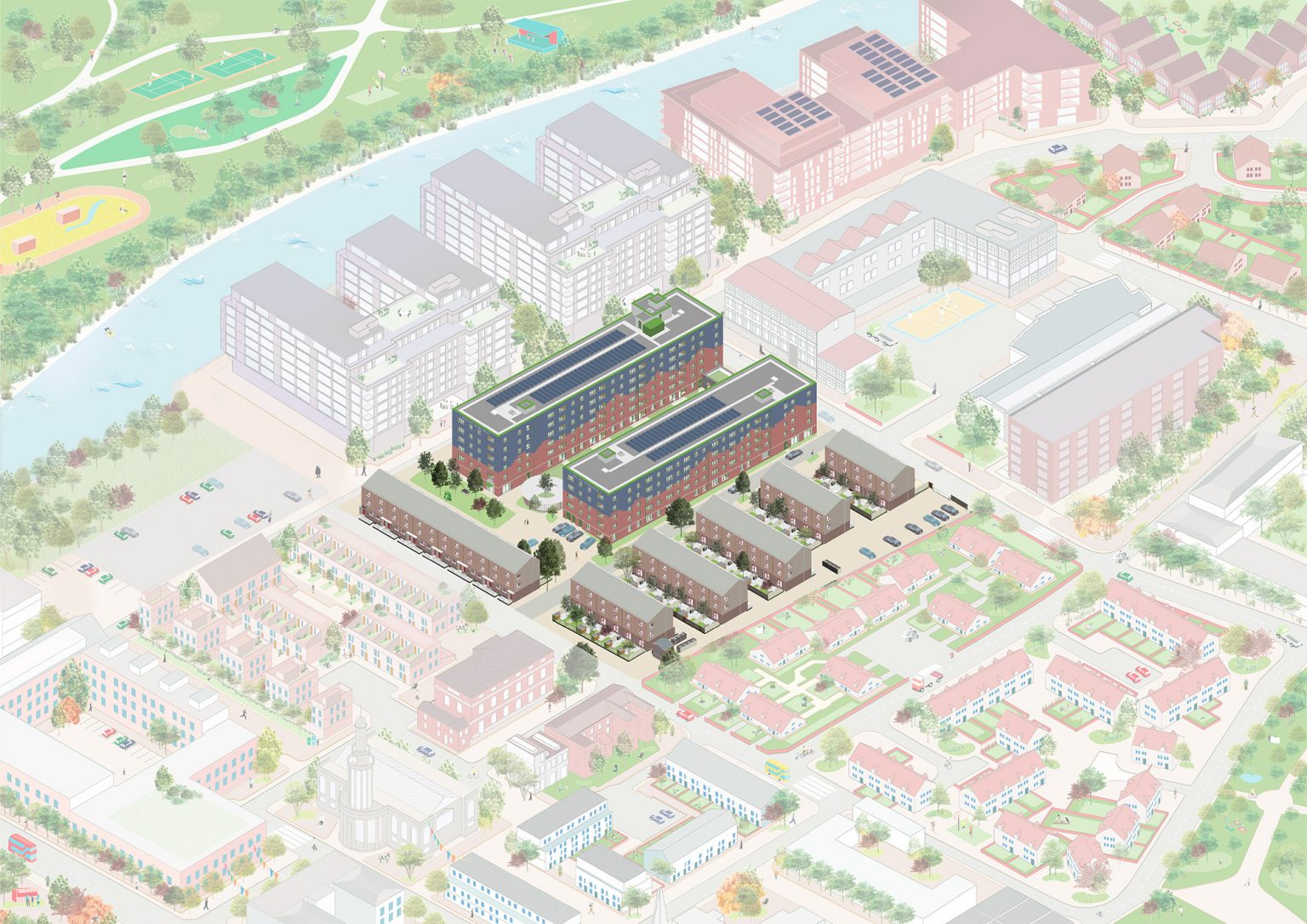
Farmer Norton sets out to establish a benchmark for high-quality housing, delivering 227 new homes across two phases within the Crescent Salford Masterplan.

Our plots are within the Adelphi Village area of the 240-acre regeneration initiative, centred around the University of Salford and delivered with them in partnership with ECF and Salford City Council. 

The development is delivered in two phases, the first introduces 42 family townhouses, followed by 185 apartment homes organised around a shared landscaped courtyard. Planning permission for both phases has been granted, and construction has begun on Phase One. 

1/2
Phase One townhouses
2/2
Phase One townhouses
1/2
Phase One townhouses
2/2
Phase One townhouses
02 Sustainability ambitions

The Farmer Norton site aims to set a benchmark within the Crescent Salford Masterplan by adopting Passivhaus principles and a fabric-first approach.

This significantly reduces energy demand, while promoting resident’s wellbeing. Simple building forms and standardised typologies have been developed to optimise thermal performance. The thermal envelope is simplified to minimise heat loss which is supported by enhanced insulation. All homes integrate energy-efficient heating and ventilation systems, ensuring comfortable internal conditions with minimal energy input. 

Two standardised residential typologies are used across the site, building on our existing work with MUSE on replicable housing models. These repeatable models support efficient construction, reduced embodied carbon, and consistent delivery of homes at scale. 

03 Townhouses for families

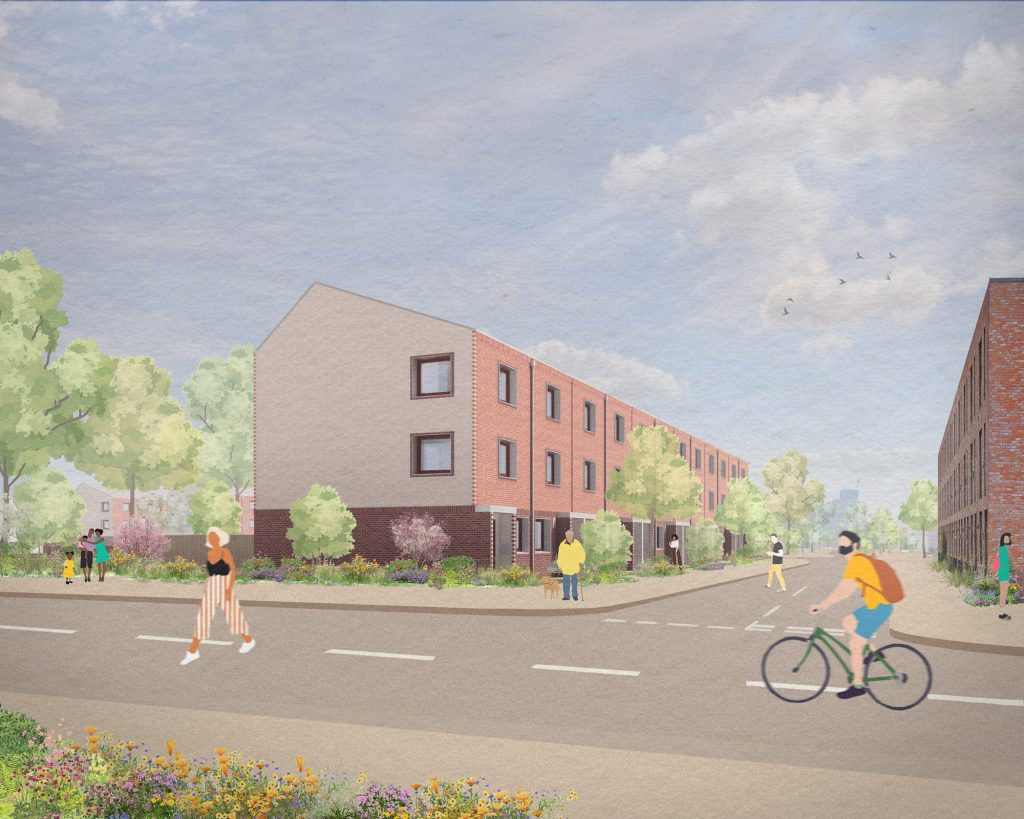
Phase One delivers 42 three-storey townhouses arranged in six terraces across the eastern and south-western areas of the site.

In a move away from homes having individual driveways, the majority of parking is consolidated on the periphery which maximises pedestrian-friendly space and access to communal areas. 

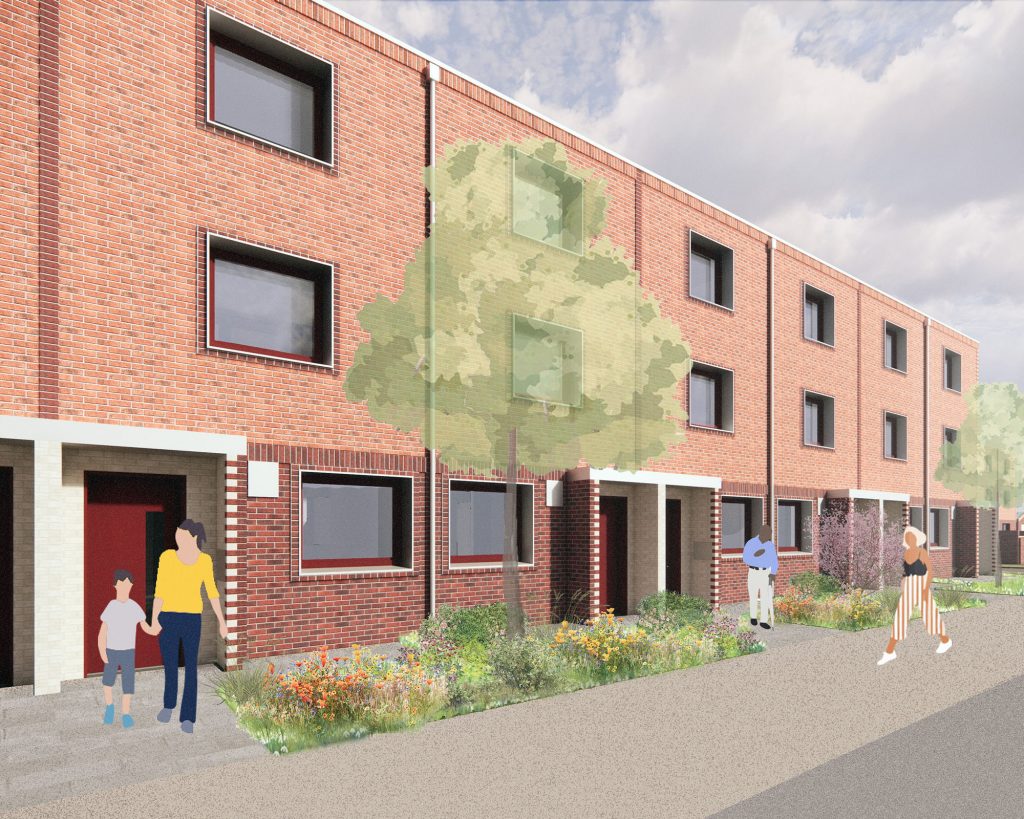
Green strips planted with wildflowers enhance biodiversity and provide soft buffers between public and private spaces. Communal ‘walks’ between terraces create routes connecting front entrances and rear gardens, while landscaped pockets offer opportunities for play, gardening, and informal gathering. Each townhouse is dual aspect and designed to exceed housing standards. Developed in line with Passivhaus principles, the homes combine high-performance building fabric with efficient heating and ventilation systems to minimise energy use and maximise comfort. 

Material choices respond to Salford’s historic and contemporary context. Dark red brick at ground level establishes a robust base, with lighter red brick above creating contrast. White brick highlights and deep red window frames reference the area’s industrial heritage. 
1/2
Phase Two
2/2
Phase Two
1/2
Phase Two
2/2
Phase Two
04 Apartments and courtyards

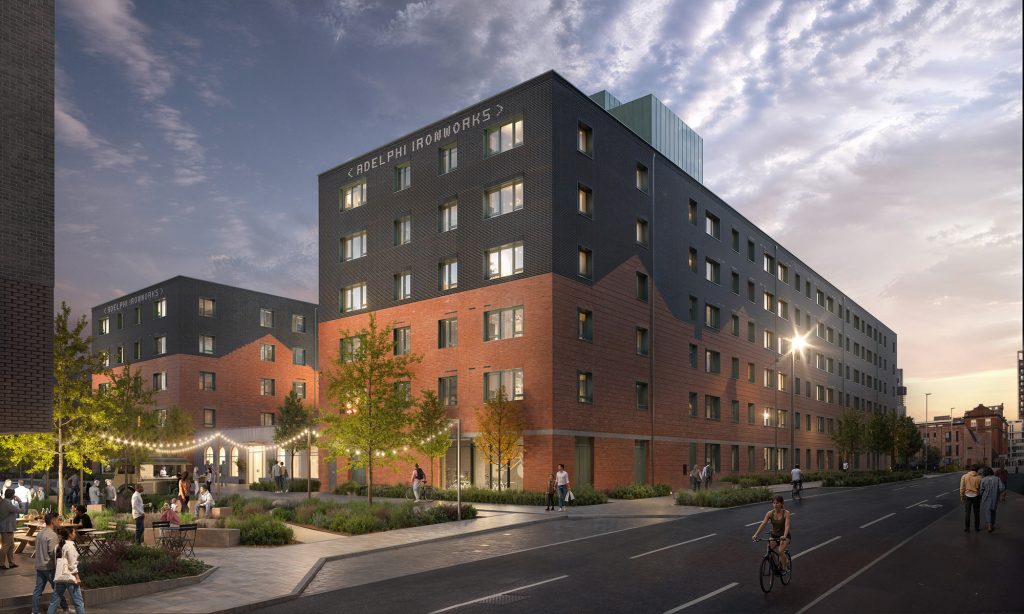
Phase Two occupies the western and north-western portions of the site with 185 apartments arranged across two linear buildings.

The scheme targets the Passivhaus Low Energy Building certification, reducing energy demand while delivering high-quality homes that support resident’s wellbeing. 

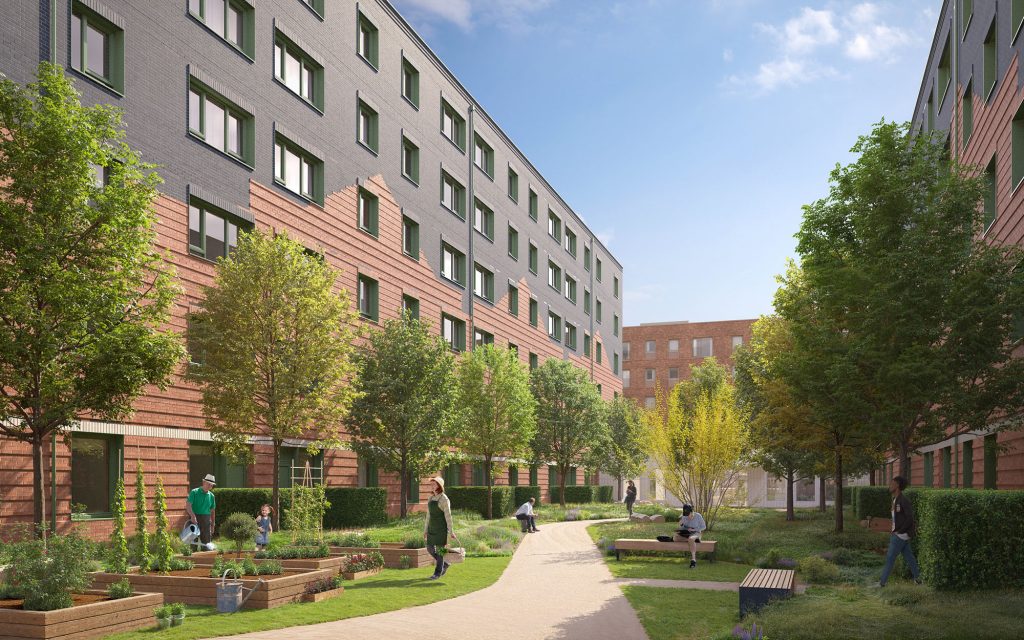
Between the apartment buildings sits a landscaped central courtyard, forming the primary shared amenity space for residents. This garden is framed to the north and south by single-storey pavilion buildings: a flexible mixed-use space and a dedicated cycle store. 

The apartments provide a mix of one-, two-, and three-bedroom homes. These are arranged across two buildings, one of six storeys, while the other steps down by one-storey, mediating between higher blocks in other areas of the masterplan and the low-rise housing in our phase one. Apartment typologies are standardised and repeated across floors and buildings, improving structural efficiency and contributing to reduced embodied carbon. 

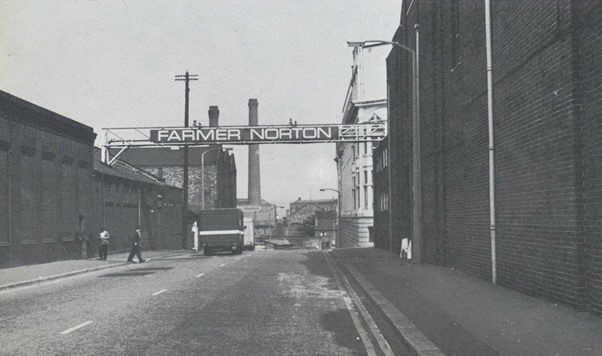
Materials for Phase Two draw inspiration from the site’s industrial heritage, with a two-tone facade referencing the historic red and blue brick of the Adelphi Iron Works. The design uses high-performance insulation, triple glazing, and airtight construction to meet Passivhaus criteria, while eco-friendly mechanical systems and high-performance building fabric support energy efficiency across the development. 

Verwandte Projekte

Farmer Norton

Close

Farmer Norton

farmer-norton

Close
Close